

Article: HERBOLOGY: No Ordinary Daisy

HERBOLOGY: No Ordinary Daisy
The Skin-Soothing Benefits of Blue Chamomile
White petals, a golden centre, and a warm scent with a hint of apple. German chamomile looks like a little daisy. Yet this familiar flower has a long history of caring for irritated skin—and some interesting science behind its soothing reputation.
You may know chamomile from your evening teacup. Here, the story begins with the flower and leads to the delicate skin beneath your eyes.
Why Is Blue Chamomile Blue?
Blue chamomile is German chamomile, Matricaria recutita. The flowers are white and gold; the blue belongs to its distilled oil.
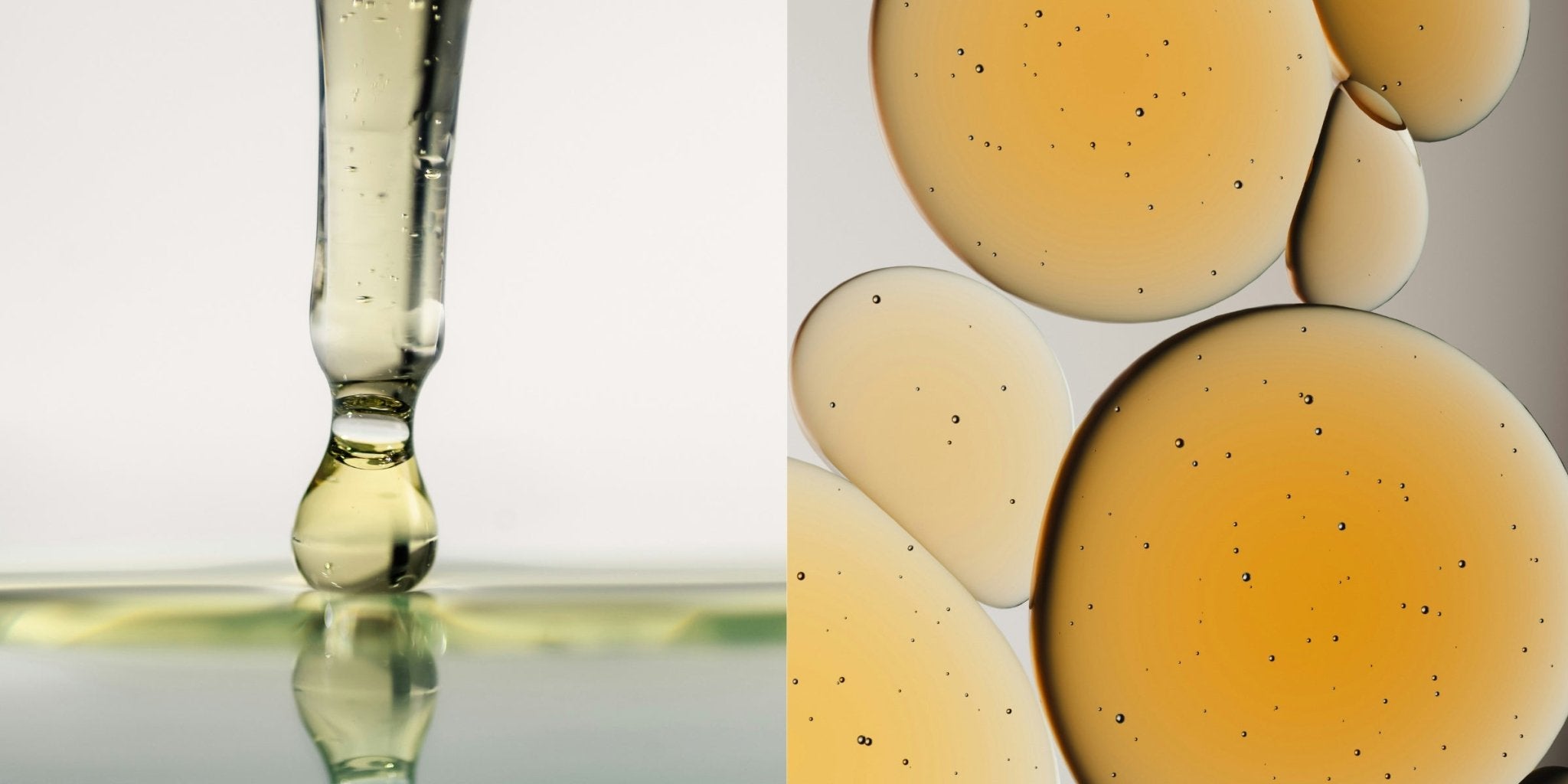
During steam distillation, a naturally occurring compound in the flower transforms into chamazulene, giving the oil its striking blue color. Different extraction methods produce different colors: the chamomile extract used in GingerChi Eye Oil is green-brown rather than vivid blue.
The flower’s folklore is less quiet than its appearance. Shakespeare wrote that chamomile grows faster the more it is trodden on—a spirited reputation for such a delicate-looking plant.
What Makes Chamomile Soothing?
Chamomile has a documented tradition of topical use for minor skin inflammation. One of its best-studied constituents is alpha-bisabolol.
In cell and animal research, bisabolol reduced inflammatory signals and swelling in experimentally irritated skin. In everyday language, researchers are investigating how it can help quiet the processes that make skin inflamed.
That gives substance to chamomile’s calming reputation. It also makes an important distinction: swelling caused by skin inflammation is different from under-eye puffiness caused by fluid retention or age-related changes. Research on chamomile supports its place in soothing skincare; it does not establish that an eye oil will remove every kind of eye bag or dark circle.
Dark Circles, Puffiness and Fine Lines: What’s the Difference?
They often arrive together, but they have different explanations.
Dark circles are not always genetic. Extra pigment can create brown discoloration. Blood vessels and underlying tissues can show through thin eyelid skin. Hollows or puffiness can cast shadows that look like darkness. Poor sleep can make existing circles more obvious, while rubbing and skin irritation can contribute to pigmentation.
Puffiness often involves fluid. It can be more noticeable on waking or after a salty meal, and lack of sleep or allergies can make it worse. Persistent bags may also reflect changes in the tissues supporting the eye area. A soothing ingredient and a fluid-related concern are not automatically the same thing.
Fine lines can look more pronounced when skin is dry. Moisturizing helps retain water in the skin and can temporarily make some fine lines less noticeable. This is the clearest role for an oil-based eye product: helping delicate skin hold moisture so dryness-related lines look smoother.
Understanding the difference helps you choose care with a purpose.
How Screen Time Fits into the Picture
Screens can affect the under-eye story, particularly when they follow us into bedtime.
Controlled research has found that prolonged evening use of light-emitting devices can delay the body’s sleep clock and interfere with sleep. A separate, small sleep-deprivation study found that observers noticed darker circles, more swollen eyes and more visible fine lines after participants lost sleep.
Together, these studies suggest an indirect connection: evening screens can disrupt sleep, and lost sleep can show around the eyes. They do not prove that ordinary computer-screen light directly breaks down under-eye collagen.
For daily care, that points to two useful habits: giving your eyes regular breaks and leaving some space between the last scroll and sleep.
The Chinese Medicine Perspective: Nourishment and Flow
Chinese medicine has a saying: “The Liver opens into the eyes.” Within this traditional framework, the eyes are considered alongside the body’s nourishment and the movement of Qi and blood.
Some dark-circle patterns are interpreted as Qi and blood stagnation—movement that has become constrained. Puffiness may be considered through the Spleen’s traditional role in processing and distributing fluids.
A practitioner looks at these signs alongside digestion, sleep, energy and other symptoms. A dark circle alone cannot tell the whole story.
For GingerChi, this wider perspective encourages care that includes the skin and the rhythms of daily life: regular meals, movement, rest, and time to settle.
Why Blue Chamomile Belongs in GingerChi Eye Oil
Each part of the blend has a purpose.
Blue Chamomile is included for its soothing character. Camellia and rosehip provide the oil base that helps reduce moisture loss. Oils help retain water already present in the skin; they are especially useful when the under-eye area feels dry or concealer catches on fine lines.
Lavender and geranium add floral notes, while cypress and frankincense bring woody, resinous warmth. Their aromatic contribution makes application a small pleasure.
The aim is comfortable, well-conditioned skin with smoother-looking dryness-related lines. Dark circles caused by pigment or hollows, and bags caused by structural changes, require a different approach.
A Few Drops, Morning or Night
After cleansing, share one or two drops of the concentrate between both eyes. Gently tap beneath the eyes, keeping clear of the lash line and the eyes themselves. The 10ml roll-on offers a convenient alternative for light application.
Let this be the moment you stop rubbing, release your jaw and look away from the screen.
A little flower. A few drops. Care with a purpose.

Leave a comment
This site is protected by hCaptcha and the hCaptcha Privacy Policy and Terms of Service apply.